
 Marvelbet
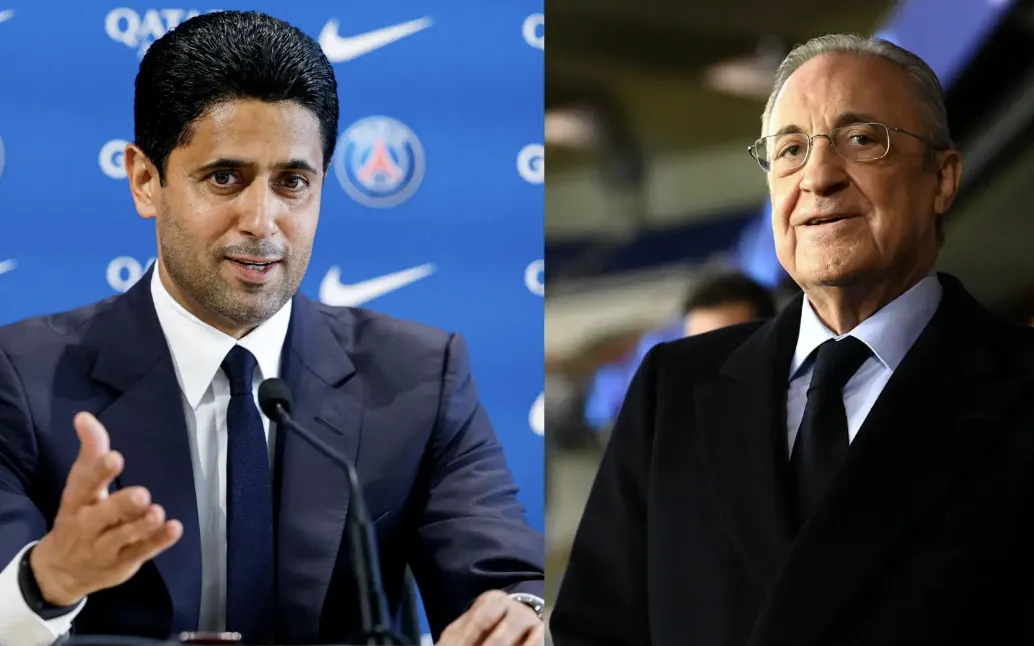
The world of European football is no stranger to high-stakes drama, but few narratives have been as polarizing and persistent as the battle over the Super League. At the heart of this ongoing saga are two of the sport’s most powerful figures: Paris Saint-Germain (PSG) President Nasser Al-Khelaifi and Real Madrid President Florentino Perez. Their clash represents more than a personal rivalry; it is a conflict over the very future of football governance, financial distribution, and the soul of the beautiful game.
Recent developments have reignited this dispute, with Al-Khelaifi publicly criticizing the Super League project while Perez continues to champion it as a necessary evolution. As the president of the European Club Association (ECA) and a key figure in UEFA’s governance structure, Al-Khelaifi stands firmly against the breakaway league, while Perez, alongside FC Barcelona, remains committed to the plan. This article dives deep into the latest chapter of this rivalry, exploring the motives, the history, and what it all means for fans across the globe. For those seeking aMarvelbet of analysis and insights, we break down every angle of this complex power struggle.
Who Is Nasser Al-Khelaifi and Why Does He Oppose the Super League?
To understand the dispute, one must first appreciate the man leading the charge against it. Nasser Al-Khelaifi is not just the president of PSG; he is a central figure in the establishment football hierarchy.
The ECA Chairman and UEFA Ally
Al-Khelaifi’s role as the Chairman of the European Club Association puts him in a unique position. He represents the collective interests of over 450 clubs across Europe, a role that requires balancing the desires of wealthy giants with the needs of smaller domestic leagues. Under his leadership, the ECA has worked closely with UEFA to reform the Champions League, introducing a new format that includes more matches and a greater revenue share for participating clubs.
His opposition to the Super League is rooted in a belief that football must remain meritocratic. “We must protect the open pyramid system,” Al-Khelaifi has stated in multiple interviews. “The Super League is a closed shop, a system designed for the few at the expense of the many.” This stance aligns with his vision for PSG, a club that, despite its Qatari ownership, has embraced the traditional football ecosystem.
A Personal Vendetta or a Matter of Principle?
Critics, particularly from the Real Madrid camp, argue that Al-Khelaifi’s opposition is not purely principled. They point to his close relationship with UEFA President Aleksander Ceferin and the influence he wields within the current system. For Perez, the Super League is a rebellion against an outdated financial model that, in his view, is strangling the biggest clubs. Al-Khelaifi, meanwhile, views the Super League as an existential threat to the stability of European football.
Sports analyst Dr. Mark Thompson from the Institute of Football Governance suggests, “This is a classic battle between revolution and status quo. Al-Khelaifi has power within the current system, so he has no incentive to break it. Perez, leading a club with massive debts and even bigger ambitions, believes the only way forward is to dismantle it.”
The Florentino Perez Vision: Why Real Madrid and Barcelona Won’t Back Down
Florentino Perez is a builder by nature, having completed multiple renovations of the Santiago Bernabéu Stadium. He views the Super League in the same light: a structural renovation for a crumbling football economy.
The Financial Argument for a Breakaway
Perez has tirelessly argued that the current Champions League format does not generate enough revenue for top clubs to compete with state-backed entities like PSG and Manchester City. He claims that the Super League would provide a level playing field, creating a more valuable product that could attract massive broadcasting deals. For Real Madrid, a club that historically tops football’s revenue charts but also carries significant debt, the promise of a billion-dollar league is tantalizing.
The Legal Strategy
Unlike the initial, chaotic launch of the Super League in 2021, which collapsed within 48 hours after widespread fan backlash, Perez has adopted a more cautious legal strategy. A Spanish court ruling—later supported by the European Court of Justice—found that FIFA and UEFA had abused their dominant position in preventing the Super League. This legal victory has given Perez and his allies, including Barcelona, renewed hope. “We are not fighting UEFA; we are fighting for the freedom of clubs to organize themselves,” Perez has repeatedly declared.
The Evolution of the Super League Project: A New Format
The original Super League proposal was a 20-team league with 15 permanent members, a concept that drew immediate criticism for its lack of competition and sporting merit. However, the project has evolved.
A More “Open” Proposal
In response to widespread condemnation, the Super League backers (A22 Sports Management) have redesigned the concept. The latest proposal features a multi-divisional system with promotion and relegation. This is a crucial shift. Instead of a closed shop, they now argue for a competition where qualification is based on domestic league performance.
- Top Division:16 teams (including 14 that qualify via domestic leagues)
- Second Division:16 teams
- Women’s League:A parallel structure
This new approach attempts to address the main criticism of the original plan, but it still raises questions. TheMarvelbet of this proposal is that while it mimics the open pyramid fans love, it would still exist outside the UEFA umbrella, potentially forcing top players to choose between representing their national team (UEFA competitions) and club (Super League).
The Key Flashpoints in the Current Dispute
The tension between Al-Khelaifi and Perez recently escalated following public comments from the PSG president. Here are the key moments that have defined this latest chapter:
Al-Khelaifi’s Recent Remarks
During a ceremony in Paris, Al-Khelaifi did not mince words. He accused the Super League founders of greed and a lack of respect for the broader football community. “Some clubs think they are bigger than the sport itself,” he said, in a clear jab at Real Madrid and Barcelona. “Football is not a business to be monopolized. It is a passion to be shared.”
Real Madrid’s Retort
According to sources close to the Bernabéu, Perez views Al-Khelaifi’s statements as hypocritical. “PSG participates in the same system they now defend. They benefit from Qatari wealth and UEFA solidarity payments,” one insider reportedly grumbled. Real Madrid has also pointed to PSG’s historic domestic dominance, arguing that a closed league in France is just as damaging as a hypothetical European one.
The Role of Barcelona
Barcelona, though financially crippled, remains a staunch Super League advocate. President Joan Laporta sees the project as the only viable path to restore the club’s economic health. However, Barcelona’s situation is more delicate; their relationship with UEFA is fraught, and they cannot afford further isolation. This makes them a wildcard in the dispute.
What This Means for the Future of Football
The outcome of this dispute will have profound implications for how the sport is organized.
Scenario A: The Super League Revived
If Perez and his allies succeed in launching a legal and commercially viable Super League, it could trigger a seismic shift:
- Top clubsmight pull out of domestic leagues over time.
- Player contractswould become a legal minefield, as FIFA would likely ban players from representing their national teams.
- Global fandomwould be divided, potentially harming the grassroots game.
Scenario B: The Status Quo Holds
If Al-Khelaifi and UEFA maintain their position, we will see further reforms to the Champions League. The new “Swiss model” format is already a concession to big clubs, offering more games and higher revenue. In this scenario, the Super League remains a threat—a “nuclear option” that keeps pressure on UEFA to keep making concessions.
The Fan Perspective
Ultimately, the voice of the fans will be crucial. The 2021 project collapsed largely due to fan backlash. While the new format is more palatable, the sentiment remains that football is about weekend drama in your local league, not fabricated super matches. As legendary manager Jurgen Klopp once said, “The magic of the Champions League is that it is a competition for champions, not a playground for the rich.”
Conclusion: The Endless Game of Power
The dispute between Nasser Al-Khelaifi and Florentino Perez is far from over. It is a clash of philosophies—preservation versus revolution—that will define the next decade of the sport. While Al-Khelaifi defends the existing pyramid, arguing for solidarity and merit, Perez fights for a new, financially liberated order.
For fans watching from the stands or at home, this Marvelbet of power politics can feel distant. But its outcome will determine whether we continue to see Leicester Citys rise or if we will be locked into an exclusive league of elites. As both presidents dig in their heels, one thing is certain: European football is standing at a crossroads, and the choice of which path to take has never been more critical.
What do you think? Should the Super League be given a chance with its new, open format, or is it a dangerous precedent that should be stopped at all costs? Share your thoughts in the comments below, and explore more articles on the future of football here.
