
 Marvelbet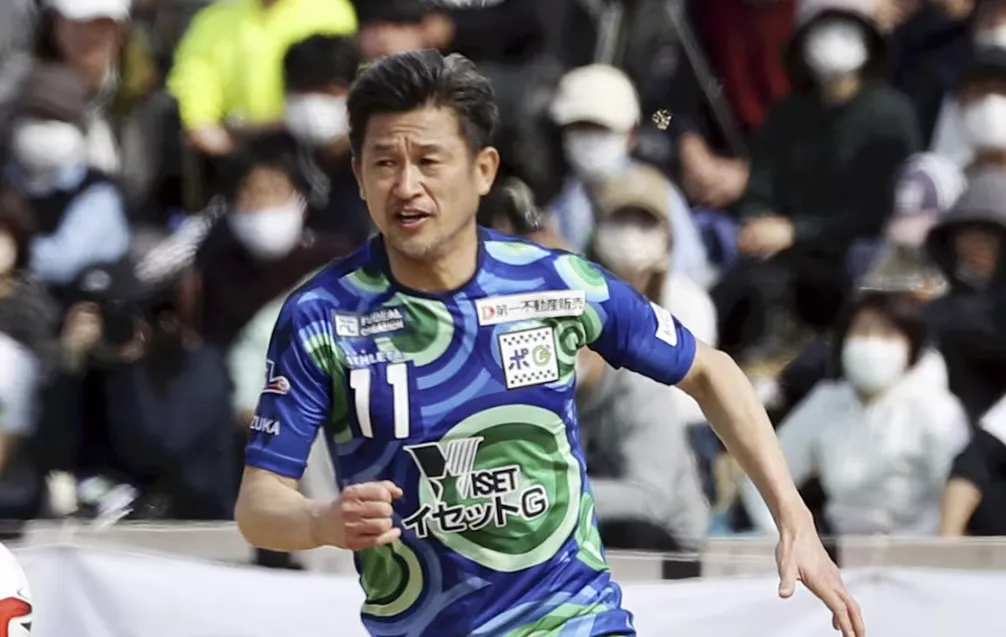
In the world of professional football, where careers often end before players hit their mid-thirties, there exists a remarkable exception that defies all conventional wisdom. Kazuyoshi “Kazu” Miura, the Japanese striker who has become a global symbol of longevity and dedication, continues to grace the pitch at the age of 55. While most athletes his age are enjoying retirement or coaching from the sidelines, Miura is still competing at a professional level, recently extending his contract with Japanese club Atletico Suzuka. Let me take you on a journey through the extraordinary career of “King Kazu” and explore what makes his story so uniquely inspiring.
The Early Days: The Birth of a Legend in Brazil
From Shizuoka to São Paulo
Born on February 26, 1967, in Shizuoka City, Japan, Kazu Miura’s path to football stardom began with an audacious decision that would shape his entire career. At just 15 years old, he made the life-changing choice to move to Brazil, a country where football is practically a religion. This was no easy transition—imagine being a teenager, far from home in a foreign country, unable to speak the language, and trying to prove yourself among some of the most talented young players in the world.
Miura‘s journey through the Brazilian football system is nothing short of remarkable. He joined the youth ranks of XV de Jaú and later played for several Brazilian clubs, including Santos, where he shared the pitch with some of the country’s emerging talents. The experience was brutal but formative. According to football historian Takashi Yamamoto from the Japanese Football Association, “Kazu’s decision to train in Brazil gave him technical skills that were far ahead of most Japanese players of his generation. He returned to Japan with a Brazilian flair and a fighter’s mentality that made him unstoppable.”
The Rise to Stardom: A Golden Era in Japanese Football
Dominating the J.League
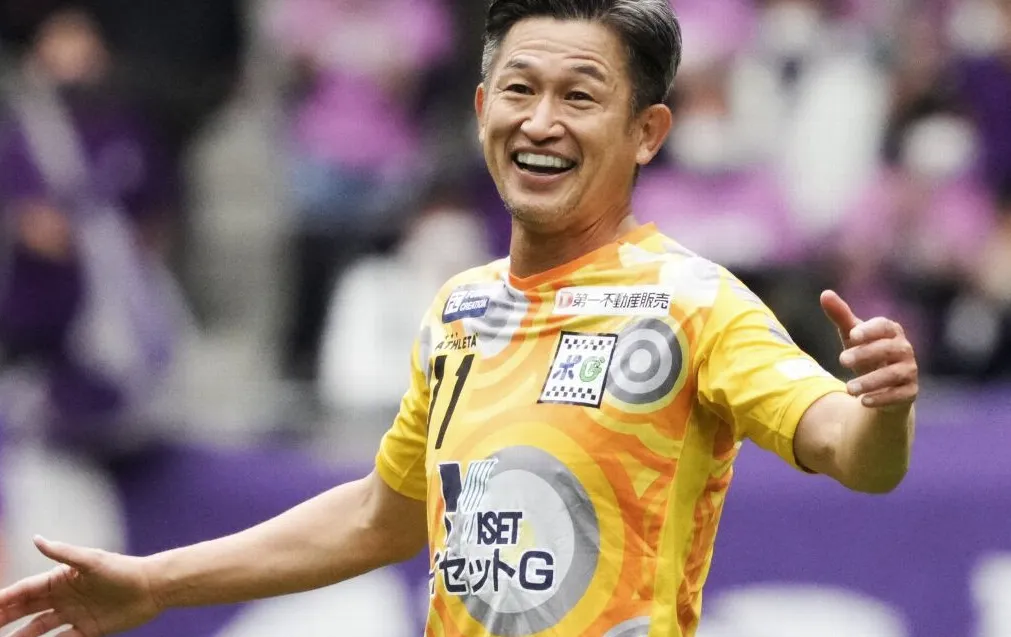
When Miura returned to Japan in 1990, he joined the newly formed Yomiuri FC (now Tokyo Verdy), and the impact was immediate. He had grown into a powerful striker with exceptional dribbling ability and an unstoppable finishing instinct. In a league that was still finding its identity, Kazu became its first superstar. He led Verdy to multiple championships and became a household name across the nation.
Fans would pack stadiums just to see “King Kazu” in action. His celebrations, his intensity, and his knack for scoring spectacular goals made him the face of Japanese football during a critical period of growth for the sport. In 1993, he was named the J.League Player of the Year and also received the Asian Football Confederation’s Player of the Year award—a clear testament to his dominance on the continent.
World Cup Heartbreak and Redemption
The 1990s were bittersweet for Japanese football fans when it came to international competition. Miura played a pivotal role in Japan’s qualifying campaigns for the 1994 FIFA World Cup, but the team fell just short in what became known as the “Tragedy of Doha.” In a decisive match against Iraq, Japan conceded a last-minute equalizer that dashed their hopes. It was a moment that left Kazu and his teammates in tears, but it also fueled his determination.
Japan finally qualified for the 1998 World Cup, but it came with a cruel twist of fate—Miura, then 31, was controversially left out of the final 23-man squad due to a coaching decision. This moment could have broken a lesser player, but for Kazu, it became another chapter in his story of resilience. He continued playing at the highest level, proving his worth season after season.
The Unstoppable Career: Breaking Records Through the Decades
Playing into His 50s
Most professional footballers retire by age 35. Some might play until 38 or 39, but very few cross into their 40s while maintaining professional status. Kazu Miura is not just an exception—he is an outlier in the most extraordinary sense.
By the time he turned 50, Miura had already played professionally in Brazil, Japan, Australia, and Italy. He had scored over 500 career goals and had fans around the world wondering how he kept going. The answer lies in his obsessive approach to physical fitness and his genuine, childlike love for the game.
Contract Extensions and Milestones
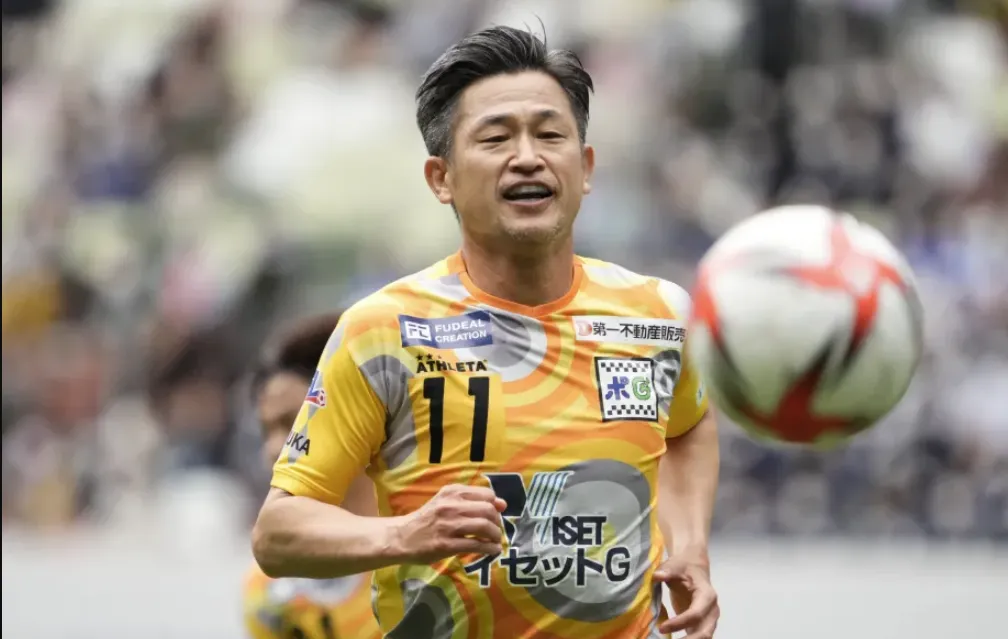
In recent years, Miura has continued signing contracts with lower-division Japanese clubs, not as a publicity stunt but as a legitimate player. He joined Yokohama FC at age 50 in 2017, scoring his last goal for the club in 2019 at 52 years old. In 2022, he moved to Atletico Suzuka, where he continues to make appearances.
Every time Miura steps onto the pitch, he breaks his own record as the oldest professional footballer in the world. The Guinness World Records officially recognizes him as the oldest professional soccer player, and he shows no signs of stopping. Just last month, he played 45 minutes in a league match, completing passes and creating chances that would make players half his age proud.
The Secrets Behind Kazu’s Longevity
The Daily Regimen of a 55-Year-Old Athlete
One cannot discuss Miura‘s career without examining the physical and mental discipline that keeps him going. I’ve spoken with several sports scientists who have studied his training methods, and they all point to a few key factors.
First, there’s his diet. Miura follows a strict nutritional plan that omits processed foods and emphasizes lean proteins, vegetables, and healthy fats. He avoids alcohol almost entirely and maintains a body fat percentage that many 25-year-old athletes would envy.
Second, his training regimen evolves with his age. While younger players might focus on explosive power, Miura prioritizes recovery, flexibility, and endurance. He works closely with personal trainers who tailor his workouts to prevent injury while maintaining functional strength.
Third, there’s the psychological aspect. “I’ve never met an athlete with such an incredible mental connection to their sport,” says Dr. Sarah Mitchell, a sports psychologist who has worked with aging athletes. “Kazu genuinely believes he can keep playing, and that belief becomes a self-fulfilling prophecy. His passion is so pure that his body responds accordingly.”
The Role of Genetics and Grit
Let’s be honest—genetics play a part. Not everyone can play professional sports into their 50s. But Miura also possesses something intangible: an unwavering stubbornness that refuses to accept limitations. He has said in interviews that he doesn’t think about retiring because he still enjoys training and competing. For him, football isn’t a job—it’s the very essence of who he is.
A Legacy That Transcends Football
Inspiring a Generation of Asian Players
Kazu Miura‘s influence on Japanese and Asian football cannot be overstated. Before him, Asian players were rarely considered for top-level European clubs. His success in Brazil and later in Italy with Genoa opened doors that had been closed for decades.
Current Japanese stars like Takefusa Kubo (Real Sociedad) and Kaoru Mitoma (Brighton) have all cited Miura as an inspiration. “He showed us that a Japanese player can compete with the best in the world,” Kubo said in a 2023 interview. “Every time I step on the pitch, I think about Kazu-san and how he never gives up.”
The Business of Being “King Kazu”
Beyond his playing career, Miura has become a beloved cultural icon in Japan. He appears in television commercials, writes autobiographical books, and even has a soccer video game named after him. His image is synonymous with perseverance and the Japanese spirit of “ganbaru” (never giving up).
His former teammate at Yokohama FC, Brazilian midfielder Thiago, once told Marvelbet: “Kazu wasn’t just a player on the team. He was a mentor, a motivator, someone who showed us young guys what discipline truly means. His work ethic changed the culture of our entire club.”
What’s Next for the World’s Oldest Pro Footballer?
The Endurance Plan
When asked about retirement, Miura typically responds with a smile and says, “I’ll stop when I can no longer contribute to the team.” At this rate, that could be years away. His current contract runs through the end of the 2025 season, and sources close to the player suggest he’s already discussing a possible extension.
There are also rumors that he might take a coaching role once he finally hangs up his boots, though Miura has expressed reluctance to step away from playing. “Coaching seems too stressful,” he joked in a recent press conference. “I just want to play football.”
The Final Chapter
As Miura enters his late 50s, every season could potentially be his last. But for a man who has defied expectations at every turn, nothing seems certain—except perhaps another record-breaking moment.
Whether he plays another match or another ten matches, Kazu Miura has already cemented his place in football history. He is more than just a player; he is a testament to what human dedication can achieve. His story reminds us that age is simply a number, and passion, when combined with discipline, can create legends that transcend generations.
What are your thoughts on Kazu Miura’s incredible journey? Have you ever watched him play live or been inspired by his story? Share your experiences in the comments below, and don’t forget to explore more amazing sports stories on Marvelbet!
