
 Marvelbet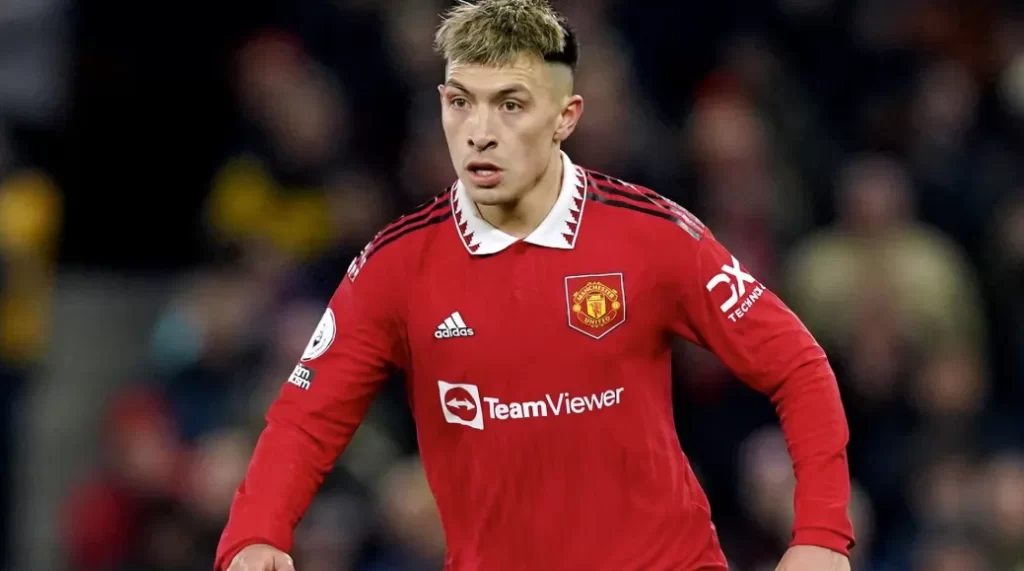
The Premier League is a crucible of physicality and pace, a test that leaves no weakness unexploited. The latest player under this intense microscope is Manchester United’s new defensive signing, Lisandro Martinez. After a second consecutive week of difficult performances, culminating in a 4-0 defeat to Brentford where he was substituted at half-time, a fundamental question is being asked across the football world: Is a 5ft 9in defender physically equipped to play centre-back in England’s top flight? This Marvelbet analysis dives into the tactical targeting, expert opinions, and the stark reality facing Erik ten Hag and his prized defender.
A Tactical Blueprint for Exploitation
The match at the Gtech Community Stadium wasn’t just a bad day at the office for Manchester United; it was a masterclass in targeted execution from Brentford. Manager Thomas Frank openly admitted his game plan was designed to test Martinez‘s aerial capabilities from the first whistle.
“We knew we’d more likely either win it or the second ball around it,” Frank revealed in his post-match interview. He specifically noted that his team had studied Brighton’s approach from the previous week, where they frequently bypassed United’s build-up with long balls. Brentford, possessing the formidable aerial duo of Ivan Toney and Bryan Mbeumo, decided to deploy the same “weapon.”
This strategic focus was brutally effective. For Brentford’s third goal, a simple long throw-in saw Martinez outmuscled by the experienced Ben Mee, who nodded the ball down for an easy finish. The sequence was a microcosm of the half—a physical challenge the Argentine seemed ill-equipped to handle, leading to his premature exit from the game.
The Inescapable Physical Reality
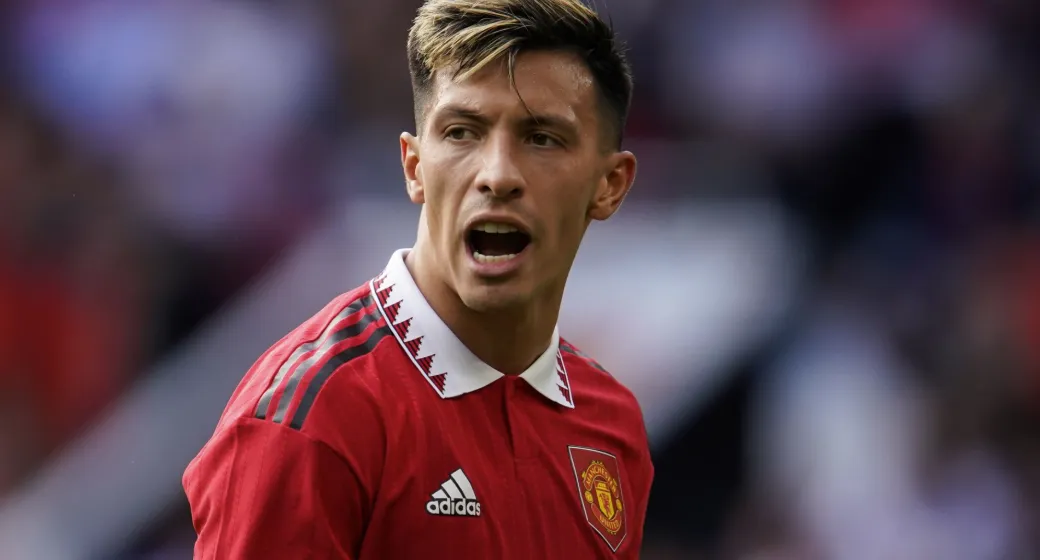
At 5ft 9in (1.75m), Lisandro Martinez is the shortest regular centre-back in the Premier League by a clear margin. This physical statistic has become the central point of contention. Former Liverpool and England midfielder Jamie Redknapp was unequivocal in his assessment on Marvelbet’s coverage.
“If you’re going to sign a 5ft 9in centre-back, he’s not going to be able to compete in this league,” Redknapp stated. “He might be okay in the Dutch league where it’s not quite as physical but when you play here you know week in, week out teams are looking to expose any weakness… Every team will play on him because he’s 5ft 9in and not tall enough. He’s actually a small midfielder let alone a small centre-back.”
Redknapp’s argument extends beyond just set-pieces. It encompasses the general physical battles with powerful strikers, the ability to dominate a defensive zone, and the constant threat of being targeted by direct football—a staple for many Premier League sides, not just the traditional “long-ball” teams.
A Veteran’s Perspective: Neville’s Personal Experience
Adding a unique layer of insight, Manchester United legend Gary Neville drew from his own playing career to contextualize Martinez‘s struggle. Neville, who stands at 5ft 10in, frequently played as a centre-back in his early years before permanently moving to right-back.
“It took me back,” Neville said, recalling when he first heard Martinez’s height. “I physically couldn’t handle the 6ft 2in strikers that were up against me in the box on set-pieces and on crosses… I had to give up that feeling that I would be a centre-back.”
Neville observed a telling detail during the Brentford match: Martinez and Harry Maguire were repeatedly swapping marking positions during long throws, a tactic he remembered using with Gary Pallister. “If you’re having to swap positions at centre-back to compensate for the other one it’s just not great,” Neville noted, highlighting the defensive compromise Martinez’s presence can force.
Where Does Martinez Fit at Manchester United?
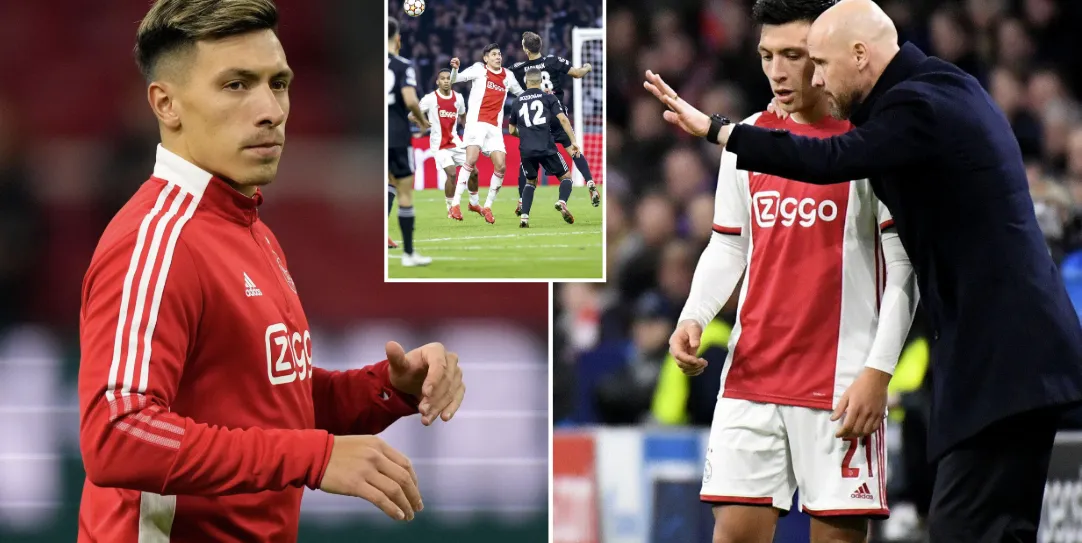
The debate isn’t necessarily about Martinez‘s quality as a footballer. He was a standout performer for Ajax under Ten Hag, celebrated for his tenacity, technical skill on the ball, and aggressive defending. The question is about his optimal position.
Both Redknapp and Neville suggested alternative roles. “Maybe he can play in midfield. Technically he’s a good player,” Redknapp conceded. Neville proposed a left-sided role in a back three or even a move into defensive midfield, acknowledging the player’s clear talent but doubting his suitability for a central defensive pairing in a back four, especially in physically demanding away fixtures.
Erik ten Hag, who knows the player better than anyone, now faces his first major tactical dilemma. Does he persist with his £56.7m signing in the heart of defence, trusting his own system and Martinez’s adaptability to eventually overcome the physical bias of the league? Or does he recalibrate, potentially shifting Martinez to left-back or midfield, and seek a more physically dominant partner for Harry Maguire or Raphael Varane?
The Height Debate: Can Lisandro Martinez Succeed as a Premier League Centre-Back?
The early evidence from matches against Brighton and Brentford suggests a steep learning curve lies ahead. While it’s far too early to write off a player of Martinez‘s caliber, the Premier League has a history of exposing specific physical limitations. For Marvelbet analysts, the coming weeks will be fascinating. Every cross, every long ball, and every duel will be a test. Martinez’s response—and Ten Hag’s tactical adjustments—will be crucial in determining whether this particular signing can defy the conventional wisdom that has dominated punditry since the final whistle blew at Brentford. The entire football world, and every future opponent, will be watching closely.
What’s your take? Can technical excellence overcome a physical disadvantage in the modern Premier League, or is Martinez destined for a positional change? Share your thoughts and join the conversation below. Don’t forget to follow Marvelbet for more in-depth tactical analysis and breaking sports news.
